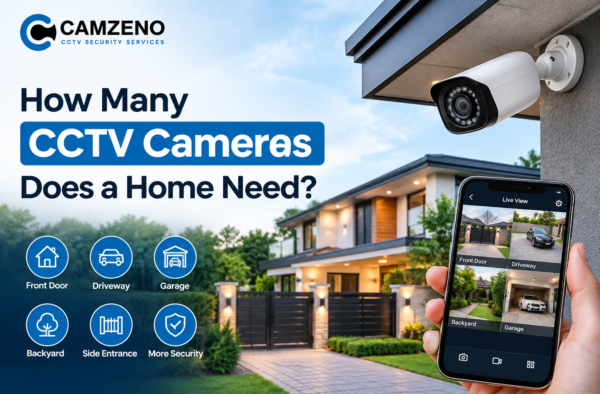
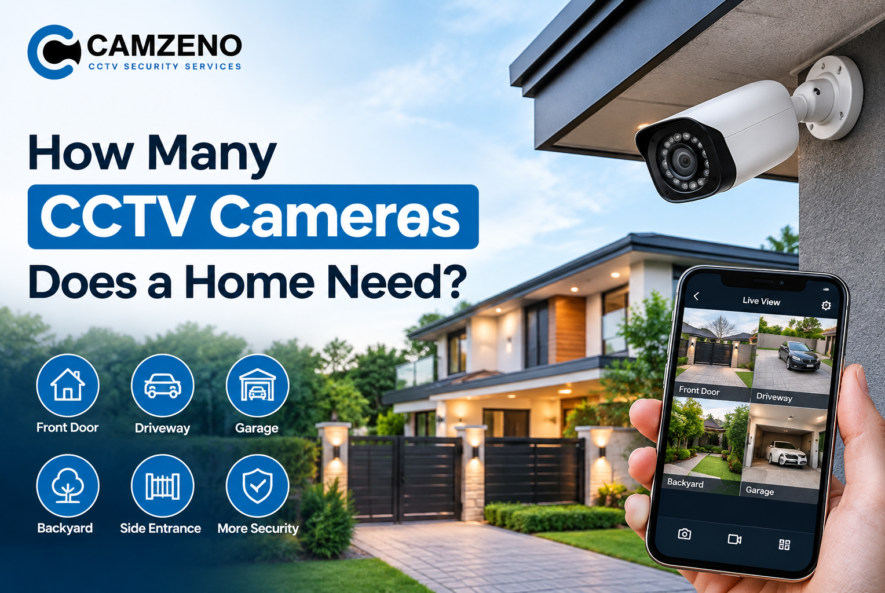
How Many CCTV Cameras Does a Home Need?
Choosing the right number of CCTV cameras for your home is not simply about installing as many cameras as possible. The goal is to cover important areas without creating unnecessary blind spots or spending more than needed.
For some homes, 2–4 CCTV cameras may be enough. Larger properties may need 6–10 or more cameras, depending on the layout, entrances, outdoor areas, and security requirements. In this guide, we’ll explain how to determine the right number of CCTV cameras for your home and where they should be installed.
Why Does the Number of CCTV Cameras Matter?
Every home has different security needs. A small house with one main entrance will require fewer cameras than a large property with multiple entrances, a garage, garden, and several floors.
Installing too few cameras can leave important areas uncovered. Installing too many can increase your equipment, installation, storage, and maintenance costs. The ideal setup should provide:
- Coverage of important entry points
- Clear views of people approaching the property
- Protection for vulnerable outdoor areas
- Monitoring of garages and driveways
- Fewer blind spots
- Reliable footage for identifying people and events
How Many CCTV Cameras Does a Typical Home Need?
There is no universal number, but these setups can provide a useful starting point:
| Home Type | Suggested Cameras | Typical Coverage |
|---|---|---|
| Small apartment | 1–2 | Main entrance and hallway/parking area |
| Small house | 2–4 | Front door, driveway, backyard |
| Medium house | 4–6 | Entrances, driveway, backyard, side areas |
| Large house | 6–10 | Multiple entrances, garage, garden, sides |
| Large property | 8–12+ | Complete perimeter and key areas |
These are starting points rather than fixed rules. The actual number depends heavily on the property’s layout and camera viewing angles.
1. Start With Your Main Entrance
The front door is usually one of the first areas to consider. A camera positioned correctly can help you monitor:
- Visitors
- Deliveries
- People approaching the door
- Suspicious activity around the entrance
For better identification, avoid placing the camera too high or pointing it toward strong direct light.
2. Don’t Forget the Back Door
The back entrance is another important location. Many homeowners focus only on the front door and overlook entrances at the rear or side of the house. If your property has a back door that provides easy access to the home, consider giving it dedicated CCTV cameras coverage.
For many houses, one camera covering the rear entrance can significantly improve overall coverage.
3. Cover the Driveway and Garage
If you have a driveway or garage, a camera can help monitor:
- Vehicles entering and leaving
- People approaching the garage
- Packages and deliveries
- Activity around parked vehicles
A wide-angle outdoor camera may cover a driveway effectively, but the exact viewing area depends on the camera’s lens and installation position.
4. Check Side Entrances and Narrow Areas
Side passages can easily become CCTV cameras blind spots. If your house has narrow pathways between walls, fences, or neighboring properties, check whether your existing cameras can actually see these areas. You may need additional cameras when:
- The side entrance is used regularly
- The area connects to the backyard
- Gates provide access to the property
- Existing cameras cannot cover the entire passage
5. Consider the Backyard and Garden
A backyard may contain doors, windows, sheds, outdoor equipment, or other valuable areas. One strategically positioned outdoor camera may cover a small backyard. Larger gardens or properties with multiple access points may require more than one.
The objective isn’t necessarily to record every square meter. Instead, focus on access points and areas where security incidents are most likely to occur.
6. Do You Need Cameras Inside the Home?
Indoor CCTV cameras are optional and depend on your personal security requirements. You might consider indoor cameras for:
- Main hallways
- Entry areas
- Large open spaces
- Areas containing valuable equipment
However, privacy should always be considered when installing cameras indoors. Avoid placing cameras in private spaces such as bedrooms or bathrooms. For many homes, a well-planned outdoor system combined with cameras at key entrances can provide substantial coverage without requiring cameras throughout every room.
7. Think About Blind Spots
The number of cameras isn’t the only important factor. Camera placement matters just as much. A home could have six cameras and still have significant blind spots if they are poorly positioned. Before installation, walk around your property and identify:
- Gates
- Doors
- Windows
- Driveways
- Side passages
- Backyard access
- Garage entrances
- Areas hidden behind walls or landscaping
Then determine whether your planned cameras can actually capture these locations.
8. Camera Resolution Also Matters
Adding more cameras isn’t always the solution to poor image quality. A higher-resolution camera can provide more detail, particularly when monitoring areas where you need to identify faces, vehicles, or other important details.
Common CCTV resolutions include:
- 2MP: Suitable for basic monitoring
- 5MP: Provides more image detail
- 8MP/4K: Useful when higher detail and wider coverage are required
However, resolution should be considered alongside lens type, lighting, camera placement, and recording quality.
9. Don’t Overlook Night-Time Coverage
A camera may produce excellent daytime footage but perform differently at night. For outdoor home security, consider cameras with appropriate night vision, infrared illumination, or low-light performance.
Pay particular attention to:
- Front gates
- Driveways
- Backyards
- Side passages
- Garage entrances
These areas should remain useful for monitoring after dark, not just during daylight.
10. How to Calculate the Right Number of Cameras
A simple way to plan your CCTV system is to divide your property into security zones.
Zone 1: Main Entrance
Front door or main gate.
Zone 2: Vehicle Area
Driveway, parking space, or garage.
Zone 3: Rear Entrance
Back door and backyard access.
Zone 4: Side Access
Side doors, pathways, and gates.
Zone 5: Additional Areas
Large gardens, sheds, additional entrances, or vulnerable locations. Once you’ve identified these zones, determine whether one camera can cover each area effectively.
This gives you a much more practical starting point than simply choosing a camera package based on the number of channels.
4-Camera vs 6-Camera vs 8-Camera Home CCTV Systems
4-Camera System
A 4-camera system can work well for a smaller home. A possible setup could cover:
- Front entrance
- Driveway
- Backyard
- Rear or side entrance
6-Camera System
A 6-camera system provides more flexibility for medium-sized homes. You could cover:
- Front gate
- Front door
- Driveway
- Backyard
- Side passage
- Garage or rear entrance
8-Camera System
An 8-camera system may be suitable for larger properties with multiple access points. It can provide broader perimeter coverage while allowing cameras to be positioned toward specific entrances and vulnerable areas.
Should You Install More Cameras Now or Later?
If you’re unsure about the final number, consider choosing a recording system with additional channels. For example, if you currently need four cameras, an 8-channel recorder could give you room to expand later.
This can be useful if you eventually add:
- A new gate
- Garage coverage
- Additional outdoor areas
- More cameras around the perimeter
Planning for expansion can help avoid replacing the entire recording system later.
Common Mistakes When Choosing CCTV Cameras
Avoid these common CCTV camera planning mistakes:
- Installing Cameras Too High
A very high camera may provide a broad view but can make facial identification more difficult.
- Ignoring Lighting
Strong sunlight, headlights, and poor nighttime lighting can affect footage quality.
- Covering Only the Front Door
Security risks aren’t limited to the main entrance. Consider all accessible entry points.
- Choosing Cameras Without Checking Their Viewing Angle
A camera’s lens determines how much area it can see. Always check the field of view before installation.
- Forgetting Storage Requirements
More cameras and higher resolutions generate more video data. Your HDD or other storage solution should match your recording requirements.
So, How Many CCTV Cameras Does Your Home Need?
For many properties, 2–4 cameras can provide basic coverage, while medium and larger homes may benefit from 4–8 or more cameras.
But the right number depends on your home’s:
- Size
- Number of entrances
- Driveway and garage layout
- Outdoor areas
- Side passages
- Security priorities
- Camera viewing angles
The best CCTV system isn’t necessarily the one with the most cameras. It’s the one that covers the important areas with minimal blind spots and provides usable footage when you need it.
FAQs
1. How many CCTV cameras are enough for a house?
Most small homes can start with 2–4 CCTV cameras, while medium and larger properties may need 4–8 or more depending on entrances, outdoor areas, and potential blind spots.
2. Where should CCTV cameras be installed at home?
Common locations include the front door, main gate, driveway, garage, backyard, side entrances, and other vulnerable access points.
3. Is 4 CCTV cameras enough for a home?
A 4-camera system can be enough for a small or medium-sized home if the cameras are positioned strategically to cover the main entrance, driveway, backyard, and another important access point.
4. Do I need CCTV cameras inside my house?
Not necessarily. Many homeowners focus on outdoor areas and entrances. If indoor cameras are used, they should be placed only in appropriate areas while respecting household privacy.
5. Should I install more CCTV cameras for better security?
More cameras don’t automatically mean better coverage. Proper camera placement, viewing angle, resolution, lighting, and night vision are equally important. The goal is to cover key areas while minimizing blind spots.
Final Thoughts
Before buying a CCTV package, take a walk around your property and identify every important entrance and vulnerable area. Then consider camera placement, viewing angle, resolution, night vision, and recording storage.
A properly planned system can provide much better coverage than simply installing cameras wherever they are easiest to mount. If you’re still unsure, a professional CCTV installer can assess your property and recommend a setup based on its layout and security requirements.