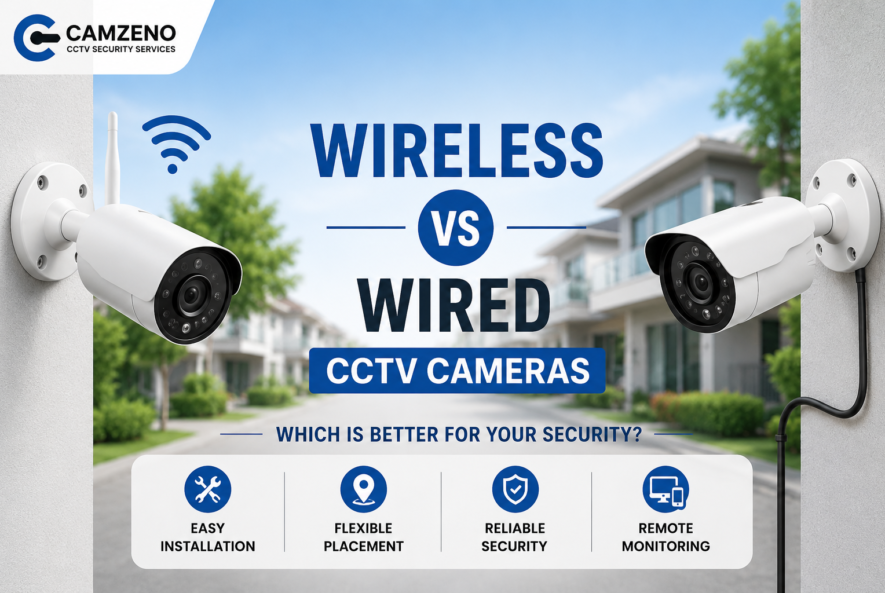
Wireless vs Wired CCTV Cameras
When choosing a CCTV system, one of the first decisions you’ll face is whether to go with wireless vs wired CCTV cameras. Both options can provide reliable security, but they work differently and offer distinct advantages depending on your property, budget, and monitoring needs.
A wired CCTV system uses physical cables to transmit video and, in many cases, power. Wireless CCTV cameras, on the other hand, use a Wi-Fi or wireless network to transmit footage, making installation more flexible.
So, which one is better—wireless or wired CCTV cameras? Let’s compare their features, benefits, limitations, and ideal applications to help you make the right choice.
What Are Wired CCTV Cameras?
Wired CCTV cameras connect to a recording device such as a DVR and NVR using cables. These cables carry video signals and may also provide power, depending on the system.
Wired cameras are widely used in homes, offices, shops, warehouses, factories, and other properties where a permanent security system is required.
Benefits of Wired CCTV Cameras
- Stable connection: Physical cables provide a consistent connection with minimal interference.
- Reliable video transmission: Wired systems are suitable for continuous monitoring and high-quality footage.
- Better for larger properties: Cameras can be installed at considerable distances with the right cabling and network setup.
- Less dependent on Wi-Fi: A wired camera system can continue operating even when the property’s Wi-Fi network is unavailable.
- Suitable for 24/7 surveillance: Wired systems are often preferred for permanent security installations.
Limitations of Wired CCTV Cameras
The main drawback is installation. Running cables through walls, ceilings, or other areas can take more time and may require professional installation. Once installed, moving cameras can also be less convenient.
What Are Wireless CCTV Cameras?
Wireless CCTV cameras transmit video over a wireless network, usually through Wi-Fi. Depending on the model, the camera may still need a power cable unless it has a rechargeable battery or another power source.
Wireless CCTV cameras are particularly popular for homes, small offices, rental properties, and locations where running cables is difficult.
Benefits of Wireless CCTV Cameras
- Easy installation: Wireless cameras generally require less cabling.
- Flexible placement: You can position cameras in areas where running cables would be difficult.
- Neater appearance: Fewer visible cables can create a cleaner installation.
- Easy to relocate: Cameras can often be moved more easily when your security needs change.
- Remote monitoring: Many modern wireless cameras support smartphone access and alerts.
Limitations of Wireless CCTV Cameras
Wireless cameras depend more heavily on network quality. Weak Wi-Fi signals, interference, network congestion, or internet problems can affect performance. Battery-powered models may also require regular charging.
Wireless vs Wired CCTV Cameras: Key Differences
| Feature | Wired CCTV Cameras | Wireless CCTV Cameras |
|---|---|---|
| Connection | Physical cable | Wireless network |
| Installation | More complex | Generally easier |
| Reliability | Highly stable | Depends on Wi-Fi/network |
| Cable requirement | Yes | Usually minimal |
| Relocation | More difficult | Easier |
| Large properties | Excellent choice | Depends on network coverage |
| Wi-Fi dependency | Low | Higher |
| Maintenance | Generally straightforward | May include battery/network maintenance |
| Best for | Permanent installations | Flexible installations |
Which CCTV Camera Is More Reliable?
If reliability is your top priority, wired CCTV cameras are usually the stronger choice. A properly installed wired system provides a stable connection without relying heavily on Wi-Fi.
Wireless cameras can also be highly effective, especially when installed within strong network coverage. However, their performance may be affected by signal strength and network conditions. For critical surveillance applications, wired systems are often preferred because they offer greater consistency.
Which Is Better for Home Security?
For a typical home, either option can work well. Wireless CCTV cameras can be ideal if you want quick installation, flexible camera placement, or minimal visible cabling. They are also useful for rented properties where extensive wiring may not be practical.
Wired CCTV cameras can be a better option if you’re looking for a long-term security system with stable connectivity and continuous recording. Consider the size and layout of your home before making a decision.
Which Is Better for Businesses?
For businesses such as shops, offices, warehouses, and commercial buildings, wired CCTV systems are often a practical choice. Businesses may require multiple cameras, continuous recording, and dependable connections.
Wireless cameras can still be useful for smaller businesses or areas where installing cables would be difficult. The best option depends on the number of cameras, building layout, network infrastructure, and security requirements.
Do Wireless CCTV Cameras Work Without Internet?
This depends on the camera and system. Some wireless cameras can communicate with a local network without an internet connection, while features such as remote viewing, cloud storage, and mobile notifications may require internet access.
Therefore, don’t assume that wireless automatically means internet-dependent. Check the camera’s specifications and recording setup before purchasing.
Are Wired CCTV Cameras More Secure?
Wired CCTV cameras can offer security advantages because their video transmission does not depend on a wireless connection. However, the overall security of a CCTV system also depends on factors such as passwords, recorder security, network configuration, software updates, and physical access.
Wireless CCTV systems can also be secure when properly configured. Strong passwords, secure Wi-Fi settings, updated firmware, and appropriate network protection are important.
Installation Cost: Wireless vs Wired CCTV
Wireless systems may appear cheaper and simpler because they require less cabling. However, the total cost depends on the camera type, recording equipment, power requirements, storage, installation, and network setup.
Wired systems may have higher installation costs because professional cable installation can take more time. However, they can be cost-effective for permanent installations where reliability is important. Rather than comparing only camera prices, consider the total cost of installing and maintaining the complete CCTV system.
Wireless vs Wired CCTV: Which Should You Choose?
There isn’t one solution that is perfect for every property. Choose wired CCTV cameras if you:
- Need a stable and reliable connection.
- Want continuous surveillance.
- Are securing a large property.
- Need multiple cameras.
- Are installing a permanent CCTV system.
- Don’t want your cameras to rely heavily on Wi-Fi.
Choose wireless CCTV cameras if you:
- Want easier installation.
- Need flexible camera placement.
- Are renting a property.
- Want to minimise visible cables.
- Need to move cameras occasionally.
- Have strong and reliable Wi-Fi coverage.
Can You Combine Wired and Wireless CCTV Cameras?
Yes. A hybrid approach can be useful when different areas of a property have different installation requirements. For example, you could use wired cameras for important outdoor entrances and fixed monitoring points while using wireless cameras in locations where cable installation is difficult.
This approach allows you to build a CCTV system around the actual layout and security needs of your property.
FAQs
1. Are wired CCTV cameras better than wireless cameras?
Wired cameras generally offer a more stable connection, while wireless cameras provide greater installation flexibility.
2. Do wireless CCTV cameras need Wi-Fi?
Most wireless cameras use Wi-Fi for video transmission, but their exact requirements depend on the model and recording setup.
3. Which CCTV camera is best for a large property?
Wired CCTV cameras are often preferred for large properties because they provide reliable connectivity across multiple monitoring points.
4. Are wireless CCTV cameras easy to install?
Yes, wireless cameras are generally easier and quicker to install because they require less cabling.
5. Can wireless CCTV cameras record continuously?
Yes, depending on the camera and storage setup, wireless cameras can support continuous recording.
6. Which CCTV system is better for a business?
Wired CCTV is often suitable for businesses that need multiple cameras and reliable continuous surveillance.
7. Can wired and wireless CCTV cameras be used together?
Yes, a combination of both can be used when different areas require different installation solutions.
Final Conclusion
The choice between wireless vs wired CCTV cameras ultimately comes down to your property’s layout, security requirements, budget, and installation preferences.
Wired CCTV cameras are an excellent choice when stability, continuous monitoring, and long-term reliability are priorities. Wireless CCTV cameras are ideal when flexibility, simpler installation, and convenient placement matter most.
Before installing a CCTV system, evaluate your property’s vulnerable areas, network coverage, recording requirements, and future security needs. Choosing the right system from the beginning can help you build a more effective and dependable security solution.